
UI UX Design Urban Mobility Solutions Tools To Help You Manage Your Daily Life Urba…
페이지 정보
작성자 Birgit Daplyn 댓글 0건 조회 19회 작성일 25-02-08 10:05본문
Urban Mobility Solutions
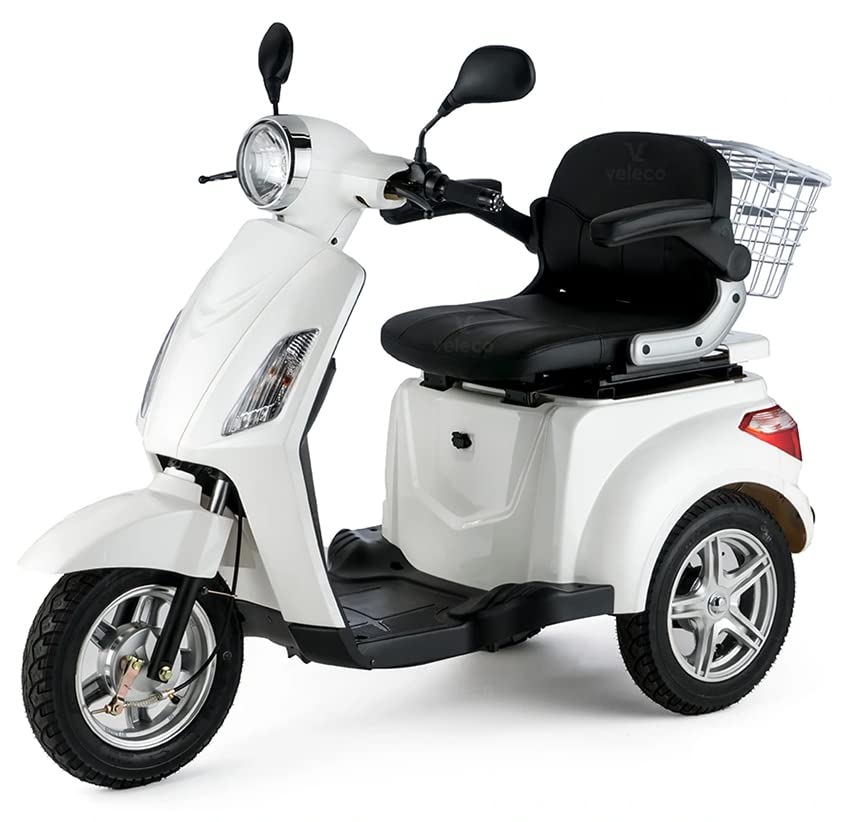 Cities face numerous problems, including congestion, air pollution and accessibility. Urban mobility solutions leveraging technology advancements could enhance the quality of life, foster economic vitality and reduce carbon footprint.
However, implementing these solutions requires collaboration across the entire electric mobility scooter adult ecosystem. It is crucial to adopt an approach that is centered on the city, and geared towards citizens. Working with cities, cross-industry partners and Mercedes-Benz experts will result in a tailor-made solution to meet the specific needs of each city.
Congestion
The issues of congestion have been a major aspect of urban electric portable mobility scooter planning. Traffic time reduces productivity for individuals and cities collectively. Cities must weigh the need for innovation in transportation with the consequences of aging infrastructure and a growing population.
Urban transportation systems must offer an accessible and safe way to move people around, while reducing pollution, noise and waste. In addition, cities need to address challenges such as parking management, traffic congestion and decarbonization.
Various approaches exist to manage congestion However, the most effective approach requires all terrain electric mobility scooter parties to take ownership of the problem. It is crucial to realize that congestion is more than just an inconvenience. It also has a direct economic impact on companies and the economy as a whole. It is therefore crucial to use accurate and high-resolution data to record the day-to-day variations of travel times to determine the root causes of congestion and the most efficient solutions.
It is essential to inform the public as well as business owners about the impact that congestion can have on their business. Providing clear and consistent messaging will help to build awareness of the issue, educate the public on solutions, and motivate business leaders to advocate congestion mitigation strategies.
The solution is to boost the capacity of roads. This can be costly and subject to many restrictions, including environmental and land-use laws. Other options include promoting alternate methods of transportation like taxi hailing apps and bikeshare programs, as well as the introduction of congestion pricing and carpooling. Lastly parking systems are often inefficient, which causes the waste and congestion. Smart parking solutions can improve space usage and divert trips from crowded roads.
Aging Infrastructure
Cities and towns across the nation are struggling to manage traffic congestion and safety concerns because of aging infrastructure. As traffic volumes continue to increase, bridges and roads put businesses and residents at risk and increasing travel times.
The aging infrastructure for transportation is a challenge that can not be solved through technology alone. The Oregon Department of Transportation has invested in new highways, transit projects and safety improvements to reduce congestion and modernize the system. These investments will ensure that the Portland region will continue to grow for generations to come.
As urbanization continues to grow, many nations are facing a shortage of affordable homes and the need for sustainable solutions in mobility is increasing. Innovative solutions like e-scooters, bikes, and e-buses are being used to reduce climate change and lower carbon emissions. These innovative mobility solutions assist in increasing accessibility for disabled people which is a growing issue for many people.
This study makes use of systematic literature surveys (SLR) to examine 62 scientific papers and forecast the future development of different scenarios to 2030. The gradual growth of automated and shared mobility is predicted to be the most significant factor in the driving of changes. The scenario "Mine is Yours" is the most popular (35%) followed by "Grumpy Old Transport" (18 percent) and "Tech-eager Mobility" (17%). Innovative legislation and supportive policies are necessary to make these innovative mobility solutions widely accepted.
Inequality
Urban mobility solutions need to not only improve traffic flow and reduce emissions, but they should also be able to reduce the amount of carbon dioxide and be socially and economically feasible for all. Transportation costs are often the most expensive household expenses and they can be particularly burdensome for low-income residents. Car payments that are high and insurance, fuel and maintenance costs can be a major financial burden for families and prevent them from accessing jobs, education, and services. Furthermore the commutes that are too long can be detrimental to the health of residents.
While public transportation is an affordable alternative to private cars however, many cities are not equipped with adequate infrastructure. The public transportation system is old and was created to serve a smaller population. It requires a significant investment to be modernized. Additionally, a lack of funding and legacy technology can hinder the development of new services.
Congestion also increases the amount of pollution in the air and poses a health risk to the general public. The resulting poor air quality can worsen respiratory ailments and lower overall quality of life. By improving and expanding the existing infrastructure, congestion can be avoided through efficient urban electric mobility scooters near me planning.
The increased capacity of public transport will reduce travel time and make it more accessible to everyone, including those who are disabled or elderly. It will also help to reduce the burden on households who own expensive cars, and free up parking spaces.
The increased use of alternative modes of transportation can have a direct impact on inequality. As cities grow more dense, the commuting disparity between whites and blacks, and AAPIs and Whites decreases. Women's commute times also decrease in comparison to men's. This suggests that growing densities force AAPIs into trading similar pay for longer commutes which in turn forces blacks to work farther away, and that women are less likely to get jobs that match their qualifications and abilities.
Air Quality
As research shows, there is a direct connection between exposure to toxic pollutants and health. Traffic congestion that is high and the use of diesel and gasoline vehicles generate large amounts of particulate matter (PM2.5, PM10) and gases like nitrogen oxides (NO) as well as sulfur dioxide (SO2) and volatile organic compounds and carbon monoxide, which are an ill-health risk and contribute to climate change.
The exposure to these pollutants can lead to heart attacks asthma, lung irritation, heart attacks as well as delayed development in children and impairment of cognitive functions. They can also cause ozone and greenhouse gas production as well as the urban heat island effect which causes temperatures to rise in cities.
Promoting active mobility and the expansion of public transport can improve air quality. Reduced emissions from urban transport can also aid in achieving the national, international, and local climate change goals.
In this context smart mobility solutions can help commuters choose electric three wheel mobility Scooter and low-emission vehicles. Additionally they can offer information on safe walking and biking routes. They can also encourage ridesharing services, which help to reduce the number of vehicles on the road and the pollution associated with them.
In a recent study, we simulated the impact of SUMPs (Sustainable Urban Mobility Plans) in 642 cities in Europe. Our findings show that SUMPs can have a significant impact on the simulation-based "urban backgrounds concentrations" of NO2 and PM2.5 with an average reduction of these substances of around 7percent. It is important to note that these results only consider emissions from the transport sector as well as urban background concentrations. Other benefits of SUMPs like reduced energy consumption, street-level concentrations, and electro-mobility are not evaluated in this study, and should be taken into consideration in future studies.
Urban best electric mobility scooter for adults solutions require an ecosystem approach that involves several actors. They must take into account equity, technology and sustainability, all while being adapted to the specific environment of each city. While new technologies may help urban mobility systems, they should also integrate existing infrastructure, encourage public transport and bike share schemes, and increase safety.
Logistics is the process of moving goods and people in a city, electric Three wheel mobility scooter and is the foundation of urban mobility. It is essential for reducing congestion, maximizing time on daily commutes and improving travel accessibility. The development of new technology, such as autonomous vehicles (AVs) have a direct effect on city logistics. It will also make the transportation industry more efficient. It will eliminate the need for human driving and reduce fatal accidents caused by driver error, and improve traffic.
Logistics is complicated due to its many stakeholders. Each has their own goals budgets, priorities, and technologies. It is difficult to ensure consistency throughout the implementation of a particular project. Furthermore, it is often hard to transfer and scale solutions from one city to another, as each has its own specific needs.
To tackle these issues cities must encourage technological innovation and develop smart, agile logistical operations that can evolve with the latest advancements in technology. This can be done by making green logistics a priority by integrating environmentally friendly urban planning into SUMPs or SULPs and examining the viability of air travel via drones. It is also essential to foster collaboration between public transportation agencies, private businesses, and logistics service providers. This will allow for better transportation and allow the city to be more fluid and ultimately improve citizens' overall quality of life.
Cities face numerous problems, including congestion, air pollution and accessibility. Urban mobility solutions leveraging technology advancements could enhance the quality of life, foster economic vitality and reduce carbon footprint.However, implementing these solutions requires collaboration across the entire electric mobility scooter adult ecosystem. It is crucial to adopt an approach that is centered on the city, and geared towards citizens. Working with cities, cross-industry partners and Mercedes-Benz experts will result in a tailor-made solution to meet the specific needs of each city.
Congestion
The issues of congestion have been a major aspect of urban electric portable mobility scooter planning. Traffic time reduces productivity for individuals and cities collectively. Cities must weigh the need for innovation in transportation with the consequences of aging infrastructure and a growing population.
Urban transportation systems must offer an accessible and safe way to move people around, while reducing pollution, noise and waste. In addition, cities need to address challenges such as parking management, traffic congestion and decarbonization.
Various approaches exist to manage congestion However, the most effective approach requires all terrain electric mobility scooter parties to take ownership of the problem. It is crucial to realize that congestion is more than just an inconvenience. It also has a direct economic impact on companies and the economy as a whole. It is therefore crucial to use accurate and high-resolution data to record the day-to-day variations of travel times to determine the root causes of congestion and the most efficient solutions.
It is essential to inform the public as well as business owners about the impact that congestion can have on their business. Providing clear and consistent messaging will help to build awareness of the issue, educate the public on solutions, and motivate business leaders to advocate congestion mitigation strategies.
The solution is to boost the capacity of roads. This can be costly and subject to many restrictions, including environmental and land-use laws. Other options include promoting alternate methods of transportation like taxi hailing apps and bikeshare programs, as well as the introduction of congestion pricing and carpooling. Lastly parking systems are often inefficient, which causes the waste and congestion. Smart parking solutions can improve space usage and divert trips from crowded roads.
Aging Infrastructure
Cities and towns across the nation are struggling to manage traffic congestion and safety concerns because of aging infrastructure. As traffic volumes continue to increase, bridges and roads put businesses and residents at risk and increasing travel times.
The aging infrastructure for transportation is a challenge that can not be solved through technology alone. The Oregon Department of Transportation has invested in new highways, transit projects and safety improvements to reduce congestion and modernize the system. These investments will ensure that the Portland region will continue to grow for generations to come.
As urbanization continues to grow, many nations are facing a shortage of affordable homes and the need for sustainable solutions in mobility is increasing. Innovative solutions like e-scooters, bikes, and e-buses are being used to reduce climate change and lower carbon emissions. These innovative mobility solutions assist in increasing accessibility for disabled people which is a growing issue for many people.
This study makes use of systematic literature surveys (SLR) to examine 62 scientific papers and forecast the future development of different scenarios to 2030. The gradual growth of automated and shared mobility is predicted to be the most significant factor in the driving of changes. The scenario "Mine is Yours" is the most popular (35%) followed by "Grumpy Old Transport" (18 percent) and "Tech-eager Mobility" (17%). Innovative legislation and supportive policies are necessary to make these innovative mobility solutions widely accepted.
Inequality
Urban mobility solutions need to not only improve traffic flow and reduce emissions, but they should also be able to reduce the amount of carbon dioxide and be socially and economically feasible for all. Transportation costs are often the most expensive household expenses and they can be particularly burdensome for low-income residents. Car payments that are high and insurance, fuel and maintenance costs can be a major financial burden for families and prevent them from accessing jobs, education, and services. Furthermore the commutes that are too long can be detrimental to the health of residents.
While public transportation is an affordable alternative to private cars however, many cities are not equipped with adequate infrastructure. The public transportation system is old and was created to serve a smaller population. It requires a significant investment to be modernized. Additionally, a lack of funding and legacy technology can hinder the development of new services.
Congestion also increases the amount of pollution in the air and poses a health risk to the general public. The resulting poor air quality can worsen respiratory ailments and lower overall quality of life. By improving and expanding the existing infrastructure, congestion can be avoided through efficient urban electric mobility scooters near me planning.
The increased capacity of public transport will reduce travel time and make it more accessible to everyone, including those who are disabled or elderly. It will also help to reduce the burden on households who own expensive cars, and free up parking spaces.
The increased use of alternative modes of transportation can have a direct impact on inequality. As cities grow more dense, the commuting disparity between whites and blacks, and AAPIs and Whites decreases. Women's commute times also decrease in comparison to men's. This suggests that growing densities force AAPIs into trading similar pay for longer commutes which in turn forces blacks to work farther away, and that women are less likely to get jobs that match their qualifications and abilities.
Air Quality
As research shows, there is a direct connection between exposure to toxic pollutants and health. Traffic congestion that is high and the use of diesel and gasoline vehicles generate large amounts of particulate matter (PM2.5, PM10) and gases like nitrogen oxides (NO) as well as sulfur dioxide (SO2) and volatile organic compounds and carbon monoxide, which are an ill-health risk and contribute to climate change.
The exposure to these pollutants can lead to heart attacks asthma, lung irritation, heart attacks as well as delayed development in children and impairment of cognitive functions. They can also cause ozone and greenhouse gas production as well as the urban heat island effect which causes temperatures to rise in cities.
Promoting active mobility and the expansion of public transport can improve air quality. Reduced emissions from urban transport can also aid in achieving the national, international, and local climate change goals.
In this context smart mobility solutions can help commuters choose electric three wheel mobility Scooter and low-emission vehicles. Additionally they can offer information on safe walking and biking routes. They can also encourage ridesharing services, which help to reduce the number of vehicles on the road and the pollution associated with them.
In a recent study, we simulated the impact of SUMPs (Sustainable Urban Mobility Plans) in 642 cities in Europe. Our findings show that SUMPs can have a significant impact on the simulation-based "urban backgrounds concentrations" of NO2 and PM2.5 with an average reduction of these substances of around 7percent. It is important to note that these results only consider emissions from the transport sector as well as urban background concentrations. Other benefits of SUMPs like reduced energy consumption, street-level concentrations, and electro-mobility are not evaluated in this study, and should be taken into consideration in future studies.
Urban best electric mobility scooter for adults solutions require an ecosystem approach that involves several actors. They must take into account equity, technology and sustainability, all while being adapted to the specific environment of each city. While new technologies may help urban mobility systems, they should also integrate existing infrastructure, encourage public transport and bike share schemes, and increase safety.
Logistics is the process of moving goods and people in a city, electric Three wheel mobility scooter and is the foundation of urban mobility. It is essential for reducing congestion, maximizing time on daily commutes and improving travel accessibility. The development of new technology, such as autonomous vehicles (AVs) have a direct effect on city logistics. It will also make the transportation industry more efficient. It will eliminate the need for human driving and reduce fatal accidents caused by driver error, and improve traffic.
Logistics is complicated due to its many stakeholders. Each has their own goals budgets, priorities, and technologies. It is difficult to ensure consistency throughout the implementation of a particular project. Furthermore, it is often hard to transfer and scale solutions from one city to another, as each has its own specific needs.
To tackle these issues cities must encourage technological innovation and develop smart, agile logistical operations that can evolve with the latest advancements in technology. This can be done by making green logistics a priority by integrating environmentally friendly urban planning into SUMPs or SULPs and examining the viability of air travel via drones. It is also essential to foster collaboration between public transportation agencies, private businesses, and logistics service providers. This will allow for better transportation and allow the city to be more fluid and ultimately improve citizens' overall quality of life.
댓글목록
등록된 댓글이 없습니다.